
railway-usa.com
06
'26
Written on Modified on
Jacobs Selected to Lead Southern California Rail Infrastructure Upgrade
Jacobs will manage the San Dieguito Lagoon project, adding double track and a platform to enhance the vital LOSSAN rail corridor, reduce delays, and improve regional connectivity.
www.jacobs.com
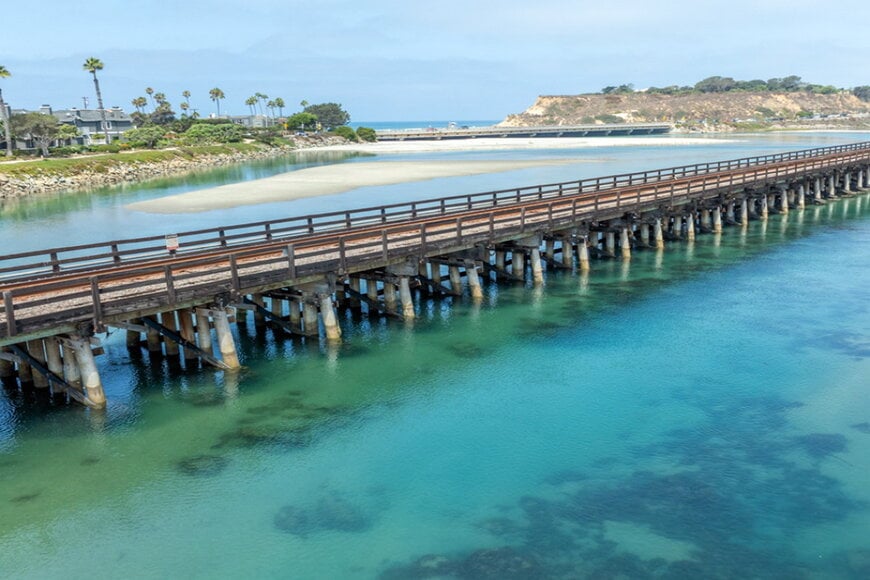
Jacobs has been appointed by the San Diego Association of Governments to oversee delivery of critical infrastructure improvements on a key segment of the Los Angeles–San Diego–San Luis Obispo (LOSSAN) rail corridor, the principal intercity rail link in Southern California handling more than 150 daily passenger trains. The assignment focuses on alleviating a longstanding capacity constraint between Solana Beach and the Del Mar fairgrounds, enhancing operational reliability and access for high-traffic events.
Project Scope and Technical Improvements
Under the agreement, Jacobs will manage construction of 2.1 miles of track enhancements, principally by installing a double track through a bottleneck location to increase capacity and reduce delays. The work also comprises replacement of the aging San Dieguito Lagoon bridge — a structure more than a century old — to improve climate resilience and durability. In addition to the track and bridge work, Jacobs is responsible for upgrades to turnouts, signalling, communications, and drainage systems that support safer and more efficient train operations. These improvements are intended to bolster both service reliability and passenger access during peak demand periods.
Strategic Importance in the Regional Rail Network
This project addresses specific operational challenges on the LOSSAN corridor, one of the busiest in the United States and the only continuous rail line linking San Diego with the broader Southern California rail network. By removing a critical single-track constraint and modernising infrastructure components, the work will reduce congestion and increase schedule resilience for both commuter and intercity services. Such targeted capacity enhancements are distinct from larger-scale new rail construction projects — they optimise existing lines to deliver measurable service improvements without the time and cost associated with entirely new alignments.
Differentiation from Other Rail Infrastructure Delivery Models
The approach taken on this contract situates Jacobs in a construction management and delivery oversight role rather than as a design-builder or prime constructor. In contrast with design-led or engineering-only contracts seen on other regional and national rail programmes, this assignment requires coordination of multiple technical disciplines, on-the-ground delivery oversight, and integration with local agencies’ operational needs. Rather than singularly providing engineering design or feasibility studies, Jacobs is accountable for managing the end-to-end construction process — a role that blends programme management with execution oversight.
Broader Context of Rail Infrastructure Work
While this project tackles a specific choke point on an existing corridor, Jacobs’ rail sector engagements also span a range of infrastructure types and delivery scopes, from high-speed rail design work to large-scale network extensions in other U.S. regions and internationally. This diversity in rail assignments indicates evolving client demand for firms capable of both detailed design and complex delivery management, each responding to distinct mobility, capacity, and resilience objectives.
www.jacobs.com
